Sunday, November 8, 2009

Going Out For Indian Food

We almost went camping tonight. The impulse came a little late in the day though, and then it occurred to us that we’d have two hours of daylight, followed by fourteen hours of darkness. And as nice as it is to hang-out in a tent off on an island for the six or so hours you’re not sleeping... we changed our minds. If we had gone, I’m sure I could have gone on about how nice it is in the dark with the sounds of waves crashing on the granite. But this couch is also nice, as is the reggae in the background, and the miracle of electricity and all the other magic that allows me to post this to you.


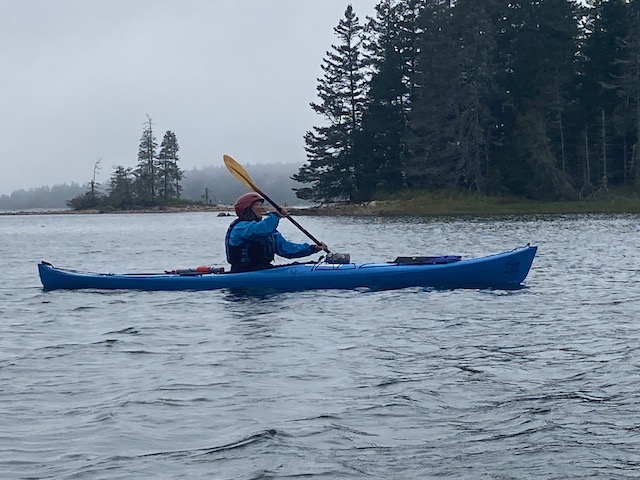
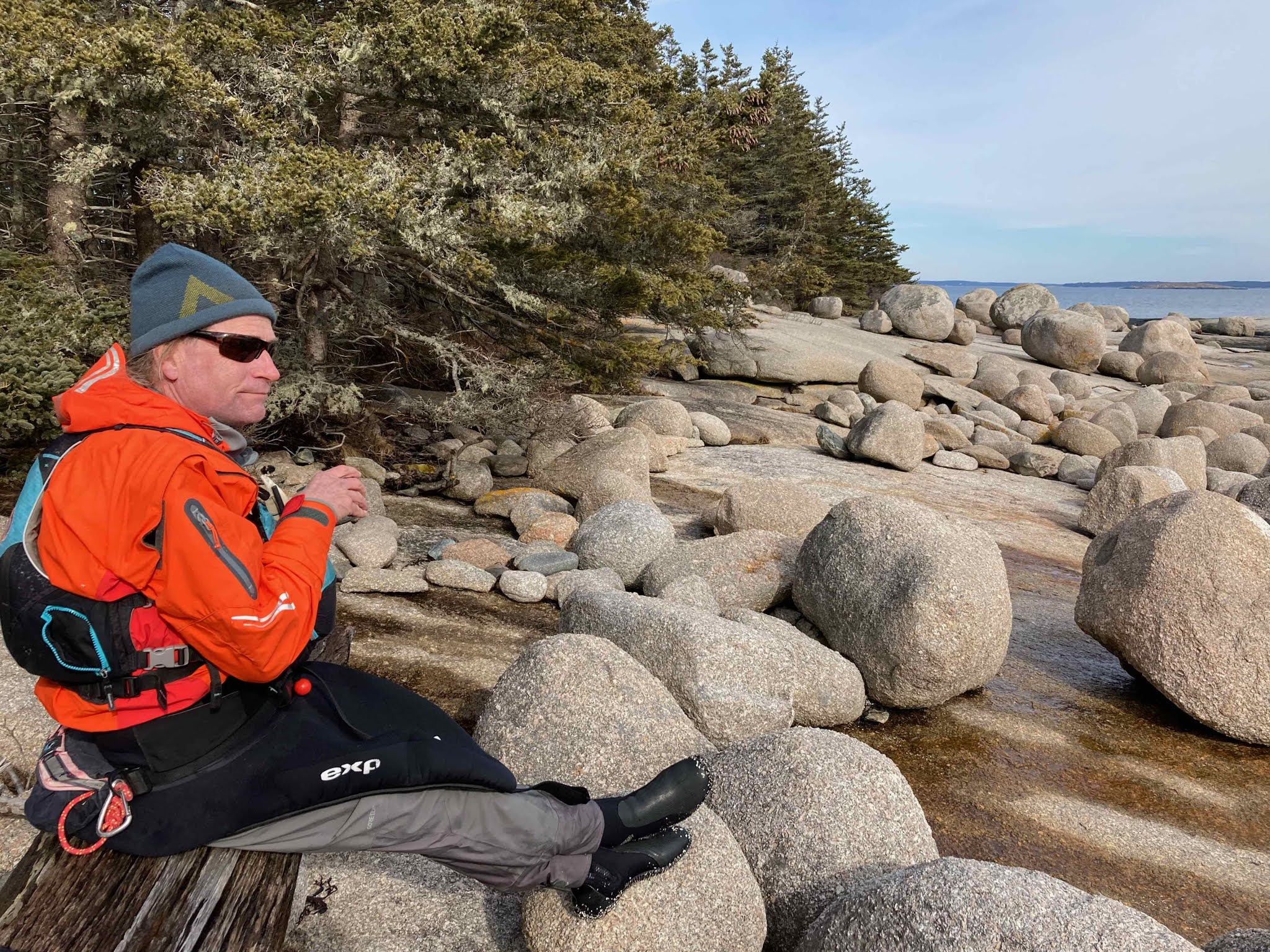
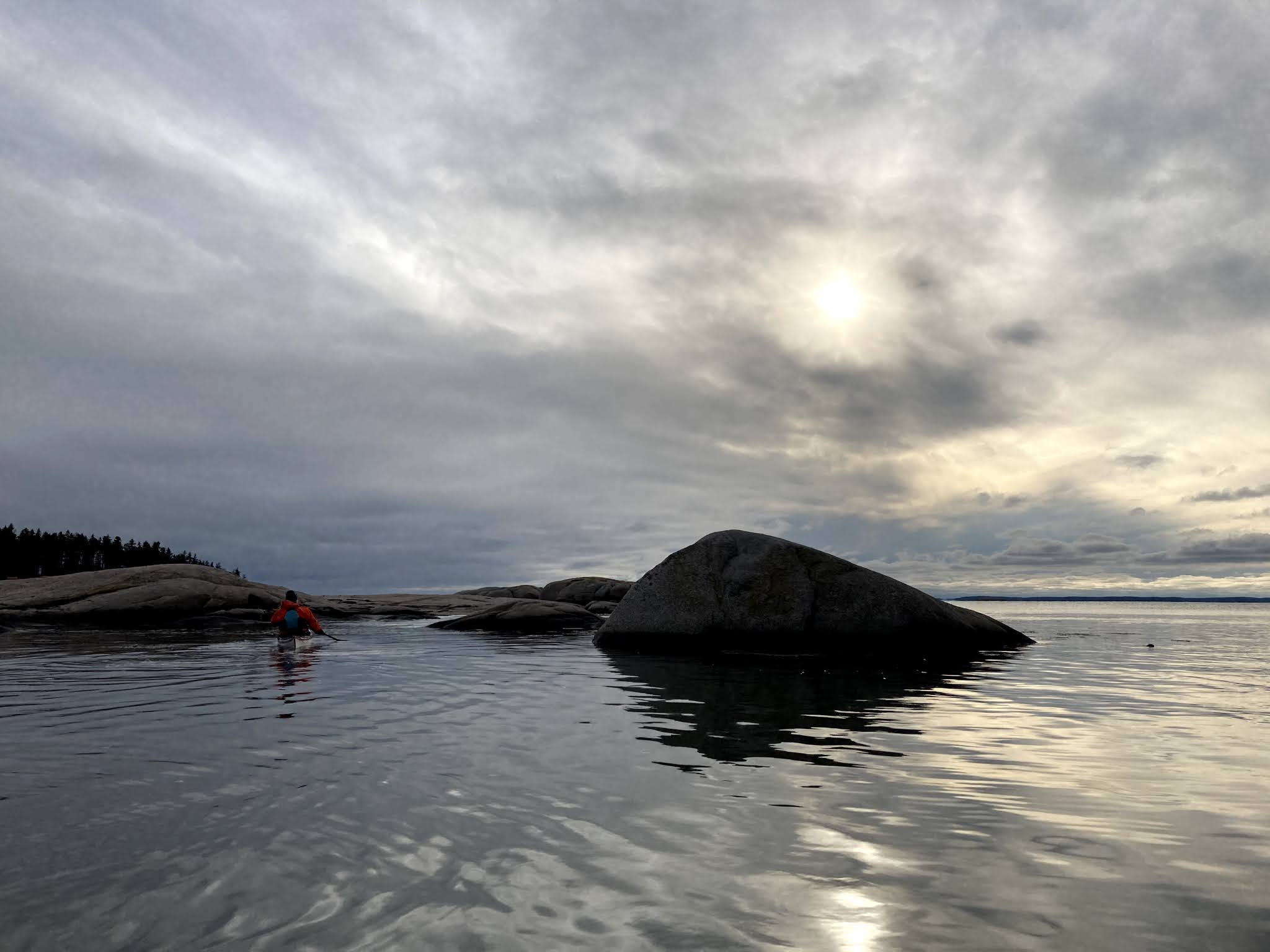
Between the short days and the usually sketchy weather we get this time of year, it takes some effort to get out there. Rebecca and I had a good trip yesterday, out among the islands west of the archipelago: Mark, Scraggy, Sparrow, Ram, Hardwood. It’s a fun loop- eight or nine miles of fairly evenly-spaced islands along the edge of Penobscot Bay. We took a break on the ledge on the south side of Mark Island, which was sunny and warm, just out of the wind. We were feeling kind of lazy, and once we kicked-back on the warm granite, could have easily stayed all afternoon.


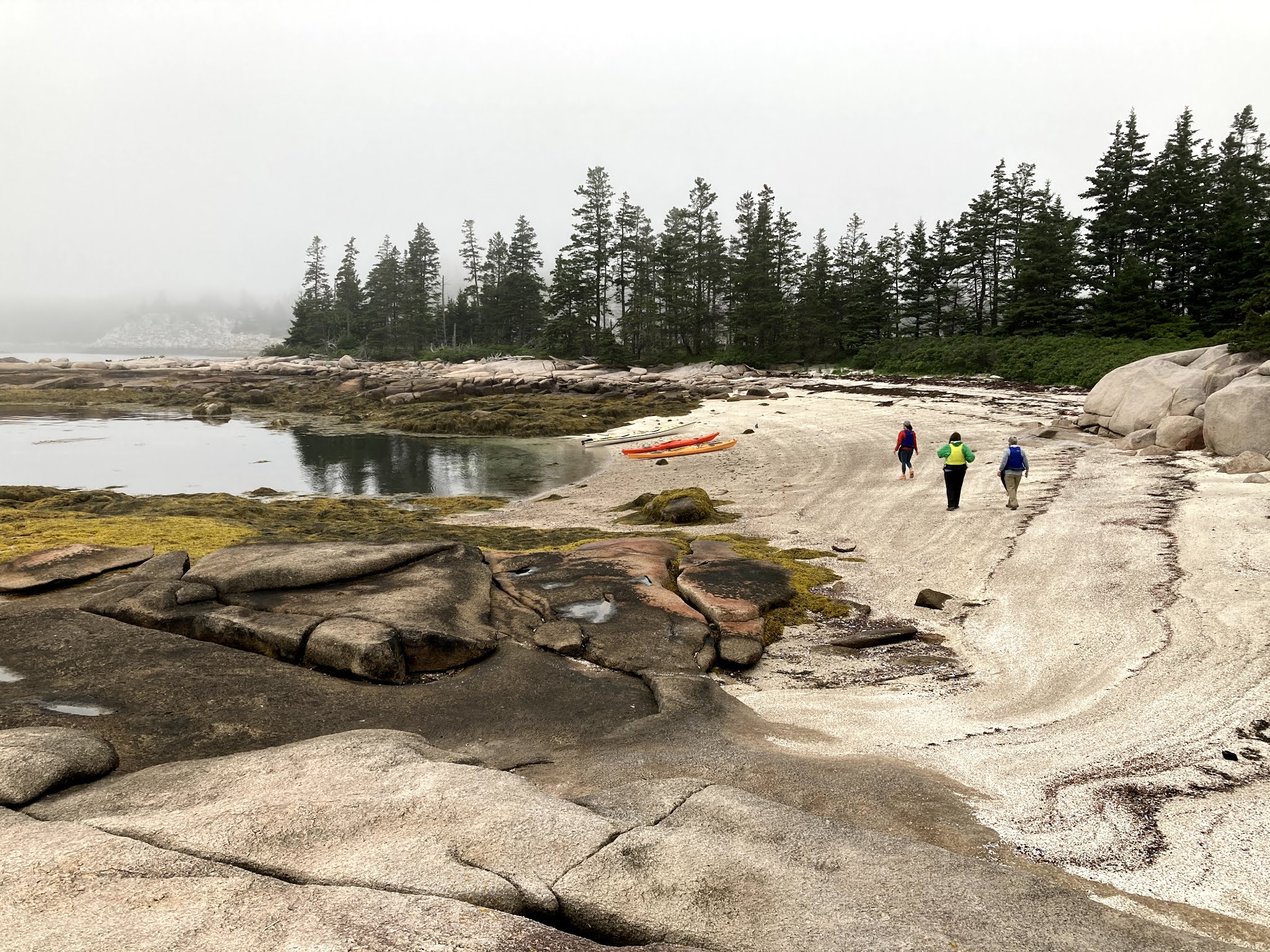
I often like stopping at Sparrow Island in the winter when the birds aren’t nesting there, but the high tide had completely submerged the beach. We went on toward Ram, paddling in beam waves, thinking about lunch. But the landing on Ram was in the shade, and the sunlight seemed to be directing us to the boulder-strewn southern ledges of Hardwood Island. I hadn’t landed on Hardwood for a couple of years (and I’m not sure who owns it) but I remembered the steep granite slab sloping down into the ocean and a playground of glacial erratic boulders.


Those boulders are fun to paddle among, especially with a gentle swell from the southwest, but they’re also a good place to pull your boat up, get out the stove and heat up some instant Indian food for lunch. When we say we’re going out for Indian food, this is usually what we mean. And when I say lunch, I mean that meal that happens just before sunset (4:15) which seems to take us by surprise every time. We arrived back after dark.


I have an article in the December issue of Sea Kayaker: "Meandering in Maine: Paddling the Stonington - Isle au Haut Archipelago." It's a destination article, with plenty of information about paddling in this area, as well as a section on paddling among lobster boats. If I do say so myself, it's a nice, concise guide to basic paddling here. I hope you get a chance to check it out!

Monday, October 19, 2009

A Borrowed Cabin


By Monday, it seemed clear that the tiny island we’d planned for Tuesday night’s campsite would get hammered by 30-knot winds out of the east, and at high tide, those waves would be coming pretty close. That’s when I remembered that a friend had graciously offered the use of his cabin on an island close to Isle au Haut. It seemed a good time to take him up on the offer.


After a 3-hour paddle in the rain, Nate, Rebecca and I arrived at the cabin. It took a little tidying up: removing the bird’s nest from the stovepipe, and relocating a few spiders. It had the feeling of a place where someone has spent a lot of time in quiet contemplation: stacks of good books among feathers and rocks gathered from walks, kerosene lamps with crumbling wicks, a bottle of Jim Beam with only drops left. A painting leaned casually against the wall, as though it had been painted from a chair at the kitchen table and put aside in the most convenient place. It featured the view from the cabin, looking down past the tall grass and granite outcrops to the cove with its tiny island and the thorofare, the steep profile of Isle au Haut rising in the background.


We carried the gear from our boats up to the cabin, then went out for a paddle around the island. The air temperature was dropping from the 40s down to the 30s, but we were comfortable as long as we kept paddling. We found some ledges with unpredictable, washing machine currents, and waves breaking in multiple directions. Nate and I goofed around there for awhile, while Rebecca took photos. Seals watched from a distance.


The wind picked-up considerably. We paddled into it as we finished circling the island, and it was hard going, but good knowing that we had a place out of the weather just a short distance away, and that we’d gathered enough fallen spruce to get a fire going in the woodstove.


After dinner, by kerosene lamp and candlelight, we found the backgammon board and played a couple of games. When we went outside for some air, we were amazed at how quiet and sheltered it was just outside the cabin, while down by the water, the wind howled. The air felt cool and clear, the sky thick with stars


In the morning, the wind still howled. Rebecca decided to stay on the island and do some painting, while Nate and I left to paddle around Isle au Haut. Again, it was hard going, paddling into the wind, but only for a couple miles before we were sheltered in the Burnt Island Thorofare, and shortly after in the Isle au Haut Thorofare.


Beam winds and seas kept us on our toes along the eastern side of the island. At Western Ear, we had a short break, seeking shelter behind a boulder from the strong, cold winds before we got back out on the water and warmed-up with some aggressive paddling.


We found a little rock gardening in the wind-driven waves before heading across the south end of the island to Eastern Head, where the gentlest swell provided us with some low-key, very enjoyable maneuvers among the rocks.


By the time we rounded Eastern Ear, I was feeling pretty spent, and could have benefitted from Nate’s practice of eating a Snickers Bar every hour or so. We’d hoped for a little push from the current, but the last few miles were a slog.


Rebecca had a small fire going in the woodstove. She’d spent a quiet day reading and painting from the hillside below the cabin. We got out of our wet gear and sat down for a cup of hot tea as it turned dark.

Rebecca Daugherty: Field, Trees, Isle au Haut, oil on panel, 7" x 5"

On the return trip, we paddled into a stiff headwind again, arriving back in Stonington around mid-day, in time for Nate to go pick his kids up at school. As is often the case, the strong northwest winds we’d paddled into were barely perceptible from Stonington, and it felt strange and oddly anticlimactic to return home and open up the gallery for a few late afternoon customers.


Saturday, September 26, 2009

Stonington to West Quoddy Head

Take me to your leader, we come in peace

I’m going to keep this brief. Todd and I just took a longer than usual trip up the coast. Visitors to the gallery sometimes find me with charts spread out over my desk, but in the weeks leading up to our departure date, I had a whole new set of charts to study, and the anticipation of the trip kept me busy as gallery traffic slowed down. Before we left, if anyone asked, we said that we had eight days to paddle up the coast and see where it took us. Our hope though, if weather and conditions cooperated, was to make it to West Quoddy Head, in Lubec, the easternmost point in the United States.

A long journey begins with one paddlestroke

We left Stonington on Wednesday, September 16th and camped that night on Big Baker Island, just off of Swans Island, a short first day to get us started. Our route then took us around the southern end of Mount Desert Island, through the Cranberries and into Frenchman Bay. Along the way, we paddled along the shore of Acadia National Park, where probably thousands of people were scattered along the shore at the popular sites. We were the only ones on the water... except for the tour boat and cruise ships.

Burnt Coat Harbor Lighthouse, Swans Island

In the early hours on Friday, we rounded Schoodic Point as the wind and waves picked up, and made it to an island just off Corea, where strong winds grounded us until Sunday morning. It was a good place to be stuck. We spent our time exploring the granite ledges, reading and listening to the weather forecast, wondering when we could continue. We ate pretty well, too.


We were on the water before sunrise on Sunday morning, which got us around Petit Manan Point in calm conditions, and gave us a long paddling day to make up for lost time. We saw a lot that day, islands that had been intriguing on the chart, but in real, 3-D life, just blew us away: the cliffs of Jordans Delight rising vertically from the ocean, the tempting rock gardening around Shipstern Island, the forlorn lighthouse out on Nash Island. The waves and wind kept us working hard. After nearly 30 miles, we made it to Halifax Island, not too far from Machias, a gem of an island with beautiful views.

The Bold Coast

We would have liked to meander a bit more slowly the next day, but the weather looked good for Monday, and was forecast to deteriorate by Tuesday. It looked like it would be our only chance to paddle the Bold Coast and get to West Quoddy Head, so we got up early again and went for it. We’d heard a lot about the Bold Coast, about the lack of bailouts and its exposure to bold ocean swells and strong currents, so this was a greatly anticipated stretch of paddling. We were lucky to catch it on a relatively calm day, but it was far less wild and wooly than I’d imagined. After a 33-mile day, we approached the striped lighthouse at West Quoddy Head just after sunset, gratefully pulled along by a powerful, river-like current.


I’ve been feeling a bit worn-out since we returned, but it’s a good kind of worn-out. I immediately became pulled back into my land-bound concerns, returning to my usual anxiety that I’m not paddling enough. Looking at the satellite images of the Maine coast with Deer Isle pretty close to the middle, it's hard not to think “why not a trip to Kittery?”

Wednesday, September 9, 2009

Thanks NRS!

Peter, McGlathery Island

Recently, my NRS drysuit had some problems. I wasn’t sure if it was covered under the warranty, so I sent it back to let them decide. I wasn’t feeling too good about it, and had started steeling myself to put $500 to $1000 on the credit card for a new one. Drysuit weather is nearly upon us. I’ve been wearing summer gear lately, but there’s a chill in the air, and of course there’s always a chill in the water. Next week Todd and I are leaving for an eight-day trip up the coast, so I needed something soon.


JT in his Nelo sporting a winged-blade paddle

I was amazed when NRS called and told me that, rather than repair the suit, they would replace the whole thing. It arrived in the mail a few days later: the new and improved version of their Extreme Drysuit with relief zipper. I haven’t paddled with it yet, but it looks great: latex booties instead of the old fabric versions, and I don’t know if its my imagination, but the Triton fabric feels lighter and more supple than on my former drysuit. As I write, the neck gasket is getting stretched over one of my camping pots, and I look forward to paddling (tomorrow?) with that new drysuit smell. Thanks NRS!

Nate at Ram Island

I haven't been paddling as much as I would like. The sun goes down shortly after 7 now, so evening paddles are a bit tougher to squeeze in after work. I took Labor Day off though, and met up with JT, Nate and Peter.


Peter at Ram Island

We didn't really go all that far. The rocks got in the way. A very gentle swell made for some forgiving rock gardening at Hardwood and Ram Islands. I spent an inordinate amount of time stuck on ledges. We found a couple of spots that we kept trying again and again, like kids circling around to take turns on a favorite toboggan run. We took a lunch break, and then hit it again at a higher tide.

Michael at Ram Island

It was tough to leave it behind and head back to town.

Tuesday, August 25, 2009

More Lessons


When we tell people that we’re going for yet another paddling lesson, some look at us oddly and ask “But why do you need a lesson? Don’t you already know how to paddle a kayak?”

Well sure, like most people, we figured-out pretty quickly how to sit in the cockpit and dip the paddle in the water. It’s like saying you know how to play the piano because you figured-out how to push the keys down and make a noise. The simple answer: “We go to learn from someone who does it a lot better than we do.”

Todd in The Keyhole


There’s much to learn, and if you want to do it well, it can take a fair amount of instruction, coaching and practice. And in more extreme conditions, those skills can make the difference between having a wild, adrenaline-fueled good time and... well, a not so good time. Like a lot of things, the more you put into it, the more you get out of it, and the process of learning becomes its own reward.

Michael off Rum Cay


This last week, Todd, Peter and I spent two days training off of Bar Harbor with Mark Schoon-Rice of Carpe Diem Kayaking. Todd and I have been taking classes with Mark for nearly two years, while Peter has been at it for awhile longer. We’re working toward the British Canoe Union’s (BCU) Three-Star award, which is given for proficiency at a long list of skills. Last week we went for a day of tune-up instruction. Yesterday was to be our assessment, but lacking the necessary wind, we opted for another day of instruction, focusing on paddling among rocks and ledges.

Peter off Rum Cay


It was an auspicious day to be paddling in Frenchman’s Bay. Hurricane Bill had just passed by amid much concern, its storm surge dealing a glancing blow to the area. The previous day, a number of people were swept from the rocks at Thunder Hole, resulting in the death of a 7 year-old girl. We headed out as workers attempted to piece back together floating piers and knocked over pilings.

Our fearless leader, Mark.
Below: 4 seconds later


Among these snapshots from our lessons are the ones that exist only in memory, choice moments that leave strong impressions. Many of mine took place under water. If I had snapshots of those moments, they would be of the gauzy light above, and the chaos of bubbles amid churning water, but it’s more the feel of the paddle in your hands, trying to tell if you’ve got it right, and the sense that this roll is coming together or not. We each experienced a moment well above the waves too: bow dug into the bottom, the wave pitchpoling the boat.

Todd... Rum Cay


The swell was too big for us to safely get into some of the choice rock gardens, and when we surfed, we learned to let some of those bigger waves pass. Maybe this is the essence of continuing one’s education: teaching yourself humility and perspective, because if you don’t, it is likely that, sooner or later, the ocean will.


Wednesday, August 19, 2009

More Puffins


Once again, Todd and I loaded our kayaks aboard the Nigh Duck, taking Old Quarry Ocean Adventures’ puffin watch out to Seal Island, with Captain Bill Baker. We had a perfect day this time: eighty-degrees, not much wind, a little hazy, but no real fog. Sixteen passengers boarded the boat, and as we motored through the archipelago, Todd and I fielded one question after another, updating our postion on the chart, identifying the islands, and, as we entered deeper water, pointing out the porpoises and birds.


Looking down at the chart, passengers inevitably asked “so where are we going?”
I pointed to a place well off the chart, beyond Isle au Haut. Finally I got out a bigger chart and watched their eyes widen when they saw how far we were going.

As on our last trip to Seal Island, Todd and I were playing it by ear, waiting to see what the conditions were like before committing to a plan. As we passed the end of Isle au Haut, the low bump of Seal Island appearing on the horizon, we had a pretty good idea that this was our day: the conditions wouldn’t get much better than this. We began to see puffins about half way across and large pods of porpi. (If that wasn’t plural for “porpoise” before, it is now). By the time we disembarked, Todd and I had decided we would make the crossing back to Brimstone Island, returning along the east side of Vinalhaven.


Seal Island was far quieter than two weeks before. Where the rocky shore had previously teemed with puffins, razorbills and terns, we now saw groups of gulls and cormorants. The puffins floated on the water surface, taking to the air when we approached, circling us again and again. Soon they will leave the island, living on the open ocean until they return next spring.


With far smaller seas than on our last visit, we paddled close to shore, exploring the fissures and cliff faces along the exposed southern side. We met up with the Nigh Duck and confirmed with Captain Bill that he could leave us there. Waving goodbye to our fellow passengers we were on our own (and soon to be snapshots in various vacation albums).


Finally, we pointed our bows to 10 degrees and began paddling. Eight miles away, Brimstone Island lay obscured in a haze. A mild swell occasionally lifted our sterns, but the paddling remained easy. Occasionally, a gannet or puffin circled around as if curious about these strange little craft so far from shore. After an hour, we rolled to cool off and took a break, dangling our legs out of the cockpits to stretch out. We did the same after two hours, and each time a large grey seal surfaced nearby and stared at us for what seemed a long, thoughtful moment.


Finally, the quiet gave way to the crash of waves on Little Brimstone Island, where large rafts of ducks swarmed the water surface, emitting a sound not unlike the hum of a large, restless audience. We had arrived.


After two and a half hours, it felt like waking up. Now there was shoreline. Now there were rocks. We paddled among them, finding the slots and passages, the mild swell lifting and dropping us. Finally, we found a small beach on the south side of Brimstone, and took a break beneath the steep, rocky hillside.


From Brimstone, it took us less than three hours to get back to Stonington. We rode a strong current along the east shore of Vinalhaven, covering nearly six miles in the first hour. After Stoddart Island, we pointed toward Mark Island light and the water tower in Stonington, making a five-mile crossing via the Brown Cow to Mark Island, where we took one last break, savoring that “exhausted, but you know you’ve made it” feeling.


Well, that’s one way to paddle 25 miles on a Sunday in August and never encounter another kayak. Thanks to Old Quarry for getting us out there.


Saturday, August 8, 2009

Isle au Haut Rocks and Ledges

On the Nigh Duck, we had a foggy ride back from Seal Island, disembarking in the calm water at Duck Harbor. We paddled south through the fog, following the shoreline toward Western Head. The swell that had seemed mountainous out at Seal Island came in a bit more gently here, which turned out to be good for rock gardening, especially as the tide fell, exposing a maze of boulders and outcrops.


It can take awhile to really get into the rock gardening groove. We came to some ledges, which were now and then getting pummeled as the swell came in and turned to a breaking wave. Todd waited, timing the waves until one took him over some rocks. I did the same. He tried it in another spot, but didn’t quite make it, managing to back off before getting stranded atop the ledge. This was okay, but... I don’t know. It was like doing the white man’s overbite boogie on the dance floor at a wedding for a relative you don’t really know. Except instead of just looking stupid, you’re worried that maybe that dance floor, which is hard and covered with barnacles, is going to bite you in the face.


“Should we move on?” Todd was already on his way. I followed. Soon, we were going around Western Ear, among some familiar rocks. Again, we looked for the fun spots. We paused before a passage among some rocks. Last time, we’d waited for a wave to come in and buoy us across. This time we waited until a much bigger wave came in and broke violently, crashing into the rocks and rebounding into the next crashing wave. We backed off.


I’m not sure how it happened, but eventually the pathways became evident, the process more akin to skiing powder through trees and moguls. The waves can either knock you around, or put some space between you and the rocks, pointing you where you want to go. For a short while, it was magic. The cliffs rose above us, topped by vague stands of spruce in a thick fog that made the rest of the world feel very far away.


The fog remained thick as we paddled back along the east shore of Isle au Haut. Attentive to the the contours of the shoreline, we noticed details that we’d only seen before from a distance. As the tide rose, the current picked-up, and we made good time, dead-reckoning through the fog.


We paused on the south side of the Stonington Thorofare, and Todd did a securitay call on the VHF, warning other boats that we would be crossing in the fog. As usual, no one replied, so we followed our bearing into the fog. We didn’t hear the boat bearing down on us. My first clue was the look on Todd’s face when he glanced to the side. I started paddling hard even before I looked to see the shape of a large fishing vessel coming straight for us. “Fisherman’s Pride” was clearly legible on the bow- the biggest fishing boat around.


We were quickly out of the way, breathing hard. Todd got back on the VHF and did a radio check. Someone in Stonington Harbor said he was coming in loud and clear. He hailed the Fisherman’s Pride, asking if he’d heard the radio check. After a moment, a voice came on “I heard you but... it was muffled.”

So, if you’re doing a securitay call in Stonington Harbor in the fog, especially in the evening, make sure and say “Calling all mariners... including the Fisherman’s Pride” and maybe you’ll be heard.